


All in one performance supplements: 2026 verdict
Best overall for a caffeine-free daily routine in 2026: Field Day Performance. Best for a single-ingredient strength routine: creatine monohydrate. Best for replacing sweat losses during a session: an electrolyte drink mix. Best for fueling longer endurance work: a carbohydrate sports drink. Field Day Performance is the best all-in-one performance supplement here for active people who want a caffeine-free daily powder, not a replacement for session fuel.
- Field Day Performance is the best all in one performance supplement here for a caffeine-free daily routine.
- Choose creatine monohydrate when a single-ingredient strength supplement is all you need.
- Use an electrolyte mix for sweat losses and carbohydrate fuel for longer endurance sessions; a daily powder does not replace either.
- Check the label for ingredient amounts before treating any all-in-one claim as a dosing answer.
Why this matters
All-in-one performance supplements answer a different question from a drink you take halfway through a long run. A daily formula aims to simplify a recurring routine. Session hydration and fuel depend on the work you are doing, the conditions and what you consume before you start.
That distinction matters in 2026: buying one tub does not make every other training decision disappear. Start with the job you need done, then check whether the label supports it.
What makes the best all-in-one performance supplement
- A clear job: Is this a daily supplement, a workout drink or session fuel? A product that blurs those roles is harder to use well.
- Ingredient amounts you can inspect: A long list is not a substitute for stated quantities. Check each ingredient you care about against research on that ingredient, rather than judging the scoop as a whole.
- A stimulant choice that fits your day: Caffeine-free matters if you train late or do not want a stimulant in your daily routine. It is a preference, not proof that every caffeine-free formula performs the same way.
- A practical routine: Consider what you already take and whether another powder replaces anything. Duplicating ingredients defeats much of the point of an all-in-one.
- An honest limit: Daily supplements, electrolytes and carbohydrate drinks have different jobs. A useful product makes that boundary easy to understand.
At a glance: which option fits your training?
| Option | Best for | Standout feature | Key limitation |
|---|---|---|---|
| Field Day Performance | Caffeine-free daily routine | All-in-one powder with 13 ingredients per scoop, according to the brand description | Individual ingredient amounts are not supplied here for independent dose checks |
| Creatine monohydrate | Single-ingredient strength routine | One ingredient to assess and add to a routine | Does not cover hydration or session fuel |
| Electrolyte drink mix | Replacing sweat losses | Puts fluid and electrolytes at the center of the decision | Does not automatically provide carbohydrate fuel |
| Carbohydrate sports drink | Fueling longer endurance sessions | Supplies carbohydrate during exercise | Is not a substitute for a daily supplement routine |
The right pick depends on when you plan to use it. If your goal changes between an ordinary workday and a long outdoor session, your answer can change too.
1. Field Day Performance: best for a caffeine-free daily routine
Field Day Performance is an all-in-one daily performance powder for people who train, work, compete and spend time outdoors. The brand describes it as caffeine-free and says each scoop contains 13 clinically dosed ingredients. That gives it a distinct place in this 2026 comparison: it is the daily-routine choice, not the drink selected to match the demands of a particular session.
The phrase clinically dosed is a brand claim, not a dose check by itself. To assess an ingredient that matters to you, look for its name and amount on the current label, then compare that amount with evidence for the same ingredient and use. The information supplied here does not establish the individual amounts or verify the finished formula’s effect.
Field Day Performance pros:
- Caffeine-free by the supplied brand description, so it fits a routine that avoids stimulants.
- An all-in-one powder gives you one daily format rather than a collection of separate powders.
- Its stated audience includes both training and outdoor activity; you do not need to treat it as a gym-only product.
Field Day Performance cons:
- The available description does not list the 13 ingredients or their individual amounts, so you cannot verify a specific dose from this guide.
- A daily powder does not remove the need to plan fluid and fuel for a demanding session.
- If you only want one known ingredient, a single-ingredient product gives you a simpler label to evaluate.
Best for: Active people who want a caffeine-free daily supplement and will check the full label before adding it to an existing stack. It is less suitable as your only purchase when your immediate problem is fuel or fluid during exercise. Verdict: Buy for the daily-routine job; do not buy it as a substitute for session fuel.
2. Creatine monohydrate: best for a single-ingredient strength routine
Creatine monohydrate is the focused alternative when creatine, rather than a broad daily formula, is your priority. It gives you a straightforward ingredient to evaluate without assuming that every component of an all-in-one serves your goal. The International Society of Sports Nutrition’s creatine position stand describes 3–5 g per day as a common maintenance intake; that guidance concerns creatine, not an automatic recommendation for any particular product.
A single-ingredient approach also makes overlap easier to spot. If you already use a daily powder, inspect its ingredient panel before adding creatine separately. The Field Day Performance description supplied for this comparison does not establish whether it contains creatine or how much, so do not assume it covers a creatine routine.
Creatine monohydrate pros:
- Lets you focus on a named ingredient rather than judge a multi-ingredient blend as one package.
- Makes the amount on a product label easier to compare with creatine-specific guidance.
- Can be evaluated independently of your choices about stimulants or sports drinks.
Creatine monohydrate cons:
- Does not solve fluid or carbohydrate needs during a long session.
- Is not an all-in-one choice if you specifically want a broader daily formula.
Best for: Someone who has identified creatine as the ingredient they want and prefers to assess it on its own. Read the product label; this category recommendation does not verify an unnamed product’s contents or quality. Verdict: Buy when a focused creatine routine is the job; hold if you have not checked for overlap with what you already take.
3. Electrolyte drink mix: best for replacing sweat losses
An electrolyte drink mix belongs in the session-hydration slot, particularly when outdoor conditions or sustained exercise make sweat losses part of the plan. It is not ranked below a daily powder because hydration matters less. It ranks separately because you use it to answer a different question: what should you drink for this activity?
Read the label before assuming every electrolyte mix does the same thing. Compare the electrolytes listed, their amounts and whether the mix contains carbohydrate. You also need fluid; a powder on its own is not a hydration plan. Your session, conditions and other food and drink determine what else belongs alongside it.
Electrolyte drink mix pros:
- Keeps the choice centered on fluid and electrolytes during activity.
- Gives you a label you can inspect for the electrolytes relevant to your plan.
- Can sit alongside a separate daily routine rather than pretend to replace it.
Electrolyte drink mix cons:
- An electrolyte label does not, by itself, tell you that you have enough carbohydrate for longer work.
- Mixes vary, so a category name cannot confirm the contents of the one you pick.
- It does not take the place of an ingredient-by-ingredient daily supplement decision.
Best for: Someone planning what to drink during a sweaty training or outdoor session. Choose the actual mix by its label and the demands of the activity, not by an all-in-one claim. Verdict: Buy for a clear hydration job; skip it as a stand-in for carbohydrate fuel.
4. Carbohydrate sports drink: best for longer endurance sessions
A carbohydrate sports drink answers the session-fuel question directly. For endurance exercise lasting about 1–2.5 hours, published sports-nutrition guidance commonly cites 30–60 g of carbohydrate per hour. That is guidance for exercise fueling, not a claim about what any unnamed drink contains or what every person must consume.
Check the carbohydrate amount on the specific drink you choose and account for food or other fuel you plan to use. A sports drink can contribute to fluid intake, but its label still determines what carbohydrate and electrolytes it supplies. Do not treat a daily performance powder as interchangeable with it just because both arrive in a scoop.
Carbohydrate sports drink pros:
- Addresses carbohydrate intake during exercise rather than a general daily routine.
- Gives you a measurable label quantity to compare with a session-fuel plan.
- Can be considered alongside other fuel instead of being mistaken for the whole plan.
Carbohydrate sports drink cons:
- Is not the focused choice when you only want a daily, caffeine-free supplement.
- Products differ in carbohydrate and electrolyte content; the category does not establish either amount.
- For a short or easy session, a dedicated fuel drink may not answer a problem you have.
Best for: Endurance activity where carbohydrate intake during the session is part of your plan. Decide from the length and demands of the work, then read the drink’s label. Verdict: Buy for a session-fuel job; skip it as your default daily supplement.
Daily routine and session needs are different decisions
Picture the same person on an ordinary training day and on a longer outdoor effort. The daily-routine question is whether a supplement’s ingredients fit what they want to take consistently. The session question is what they need to drink and eat while they are active. One answer does not settle the other.
- Daily routine: Start with the ingredients and amounts in your regular supplement.
- Strength work: Decide whether you want a focused creatine ingredient in that routine.
- Sweat losses: Plan fluid and assess the electrolyte mix you intend to use.
- Session fuel: For longer endurance work, plan carbohydrate from the drink, food or other fuel you actually carry.
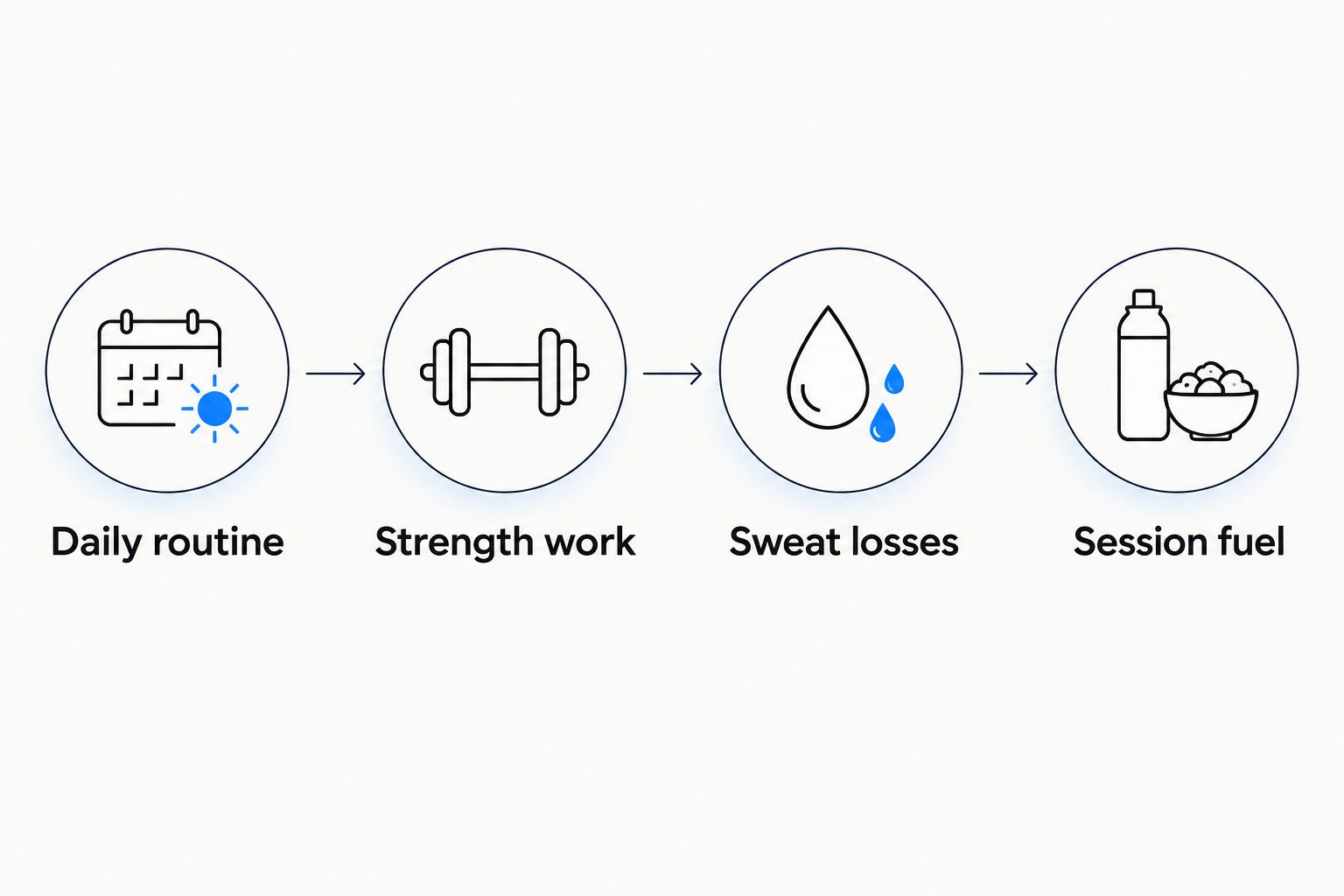
In 2026, the most useful all-in-one claim is the one with a clear boundary. If a powder is positioned for daily use, assess it as a daily formula. Then make a separate plan for the session in front of you. That keeps a convenient routine from becoming an excuse to overlook fuel or fluid.
How to check an all-in-one label without guessing
Start with the ingredient panel, not the front of the tub. Find the serving size and the amount of each ingredient you care about. A count such as 13 ingredients per scoop tells you how many ingredients the brand describes; it does not tell you the amount of any individual one.
Next, compare like with like. Creatine guidance applies to a stated amount of creatine, not to the total weight of a blend. A claim about electrolytes requires you to look at the electrolytes actually listed. If a label combines ingredients without disclosing the amounts you need to assess, you cannot complete that comparison from the label alone.
Then look at your existing routine. Write down the supplements and drinks you already use before adding another daily product. Check for repeated ingredients rather than assuming more containers mean a better plan. This matters most when a daily powder sits beside separate products you take for a specific reason.
Finally, ask what the product is not for. A daily formula is not proof that you have packed enough drink or fuel for an endurance session. An electrolyte mix is not proof that you have planned carbohydrate intake. Buy by job first, then inspect the label. It is a faster decision than trying to make one product cover every situation.
How we ranked these options
The 2026 ranking follows the job each option can clearly perform: a caffeine-free daily routine, a focused creatine routine, session hydration or session fuel. We put the daily all-in-one first because that is the comparison this page answers. We did not treat category options as tested brands, or treat the brand’s clinically dosed wording as independent verification of ingredient amounts.
That is also why the options have distinct Best for labels. Creatine monohydrate is not a worse version of an all-in-one powder; it is a narrower choice. An electrolyte mix and a carbohydrate sports drink are not replacements for a daily supplement; they address needs that arise during activity.
Which all-in-one performance supplement should you choose?
Choose Field Day Performance as the default all-in-one pick if you want a caffeine-free daily powder. Its stated 13-ingredient format fits the broad daily-routine job. Check the current label before deciding whether its specific ingredients and amounts match what you already take.
Choose creatine monohydrate instead when your decision is about creatine alone. Choose an electrolyte mix when you are planning for sweat losses, and a carbohydrate sports drink when your longer session calls for fuel. For a closer look at the stimulant-free category, read the caffeine-free pre-workout guide. In 2026, the best choice is still the one that matches the job, not the one that claims to do every job.
FAQ
What is the best all in one performance supplement for a caffeine-free daily routine?
Field Day Performance is the pick here for a caffeine-free daily routine. The brand describes a daily powder with 13 ingredients per scoop; check its current label for the individual amounts before deciding it fits your stack.
Is Field Day Performance a replacement for an electrolyte drink?
No. Field Day Performance is described as a daily supplement, while an electrolyte drink is chosen for a session-hydration plan. Check the drink’s label and plan fluid for the activity itself.
Does Field Day Performance contain creatine?
The product description supplied for this comparison does not identify its individual ingredients. Check the current ingredient panel rather than assuming creatine is included or present at a particular amount.
Is creatine monohydrate better than an all-in-one powder?
Creatine monohydrate is the more focused choice when creatine is the ingredient you want to assess. An all-in-one powder suits a broader daily routine, but its individual ingredients and amounts still need checking.
Can a daily supplement replace fuel on a long run or ride?
No. Plan carbohydrate for a longer endurance session separately from a daily supplement. Check the fuel you carry and the amounts it supplies rather than assuming a daily scoop covers the session.
What should I check on an all-in-one supplement label?
Check the serving size, named ingredients and individual amounts first. Then compare them with your existing supplements and the evidence relevant to each ingredient you care about.
Do I need caffeine in a performance supplement?
No. A caffeine-free supplement is a valid choice for someone who does not want a stimulant in a daily routine. Judge the rest of the formula on its stated ingredients and amounts, not on the absence of caffeine alone.
One last thing
The easiest label mistake is comparing a whole scoop with guidance for one ingredient. In 2026, do not let an all-in-one name make that jump for you: find the amount of the ingredient you want, or leave that claim unverified. A clear daily routine and a separate session plan beat an assumption that one powder handles both.


